


Expert Technical Support for Reliable System Performance
Every GIS installation comes with a pressure problem — not in the switchgear itself, but in how the gas gets there. The client’s field teams were repeatedly forced to disconnect and reconnect a single hose assembly each time they needed to switch between filling and recovery operations on adjacent compartments. On large GIS installations with multiple bays, this added hours of nonproductive time per site, increased the risk of moisture ingress at each reconnection point, and left technicians managing pressure manually with no automatic shutoff when target values were reached. The ask was clear: eliminate the reconnection cycle, protect gas purity, and make the process automatic. Our answer was a dual section nitrogen filling machine — Section A and Section B — that allows simultaneous or independent filling, vacuuming, and recovery on two GIS compartments at once, all controlled from a single HMI touch panel. No hose changes. No manual pressure guessing. One operator. Full control.
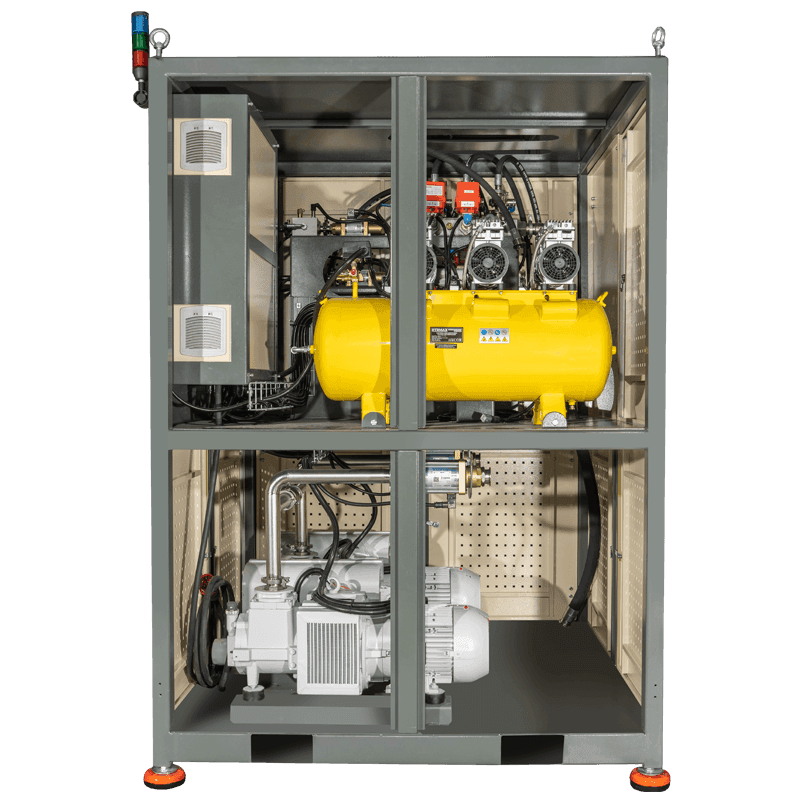
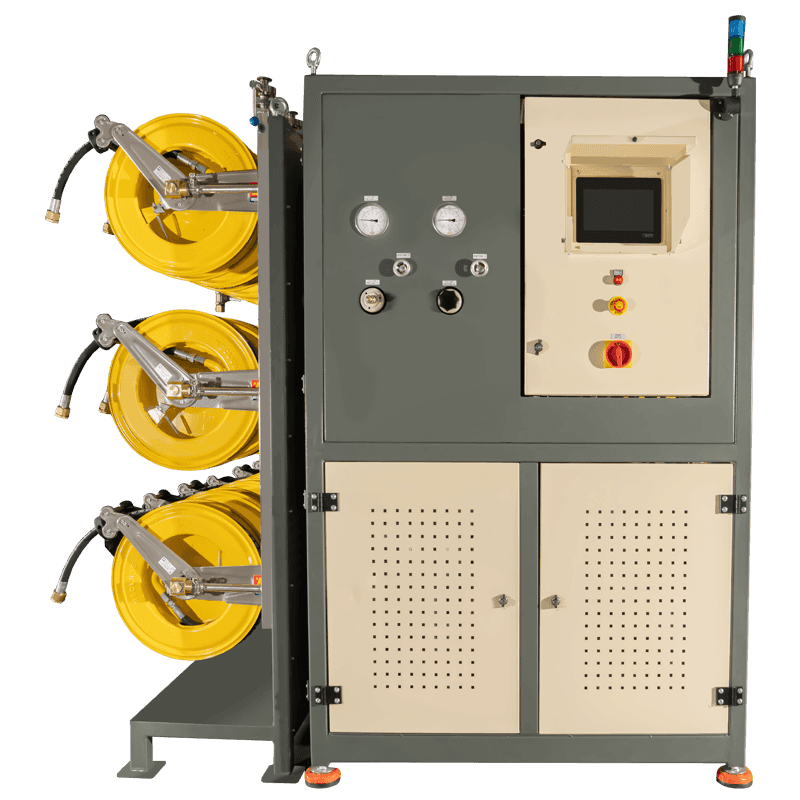
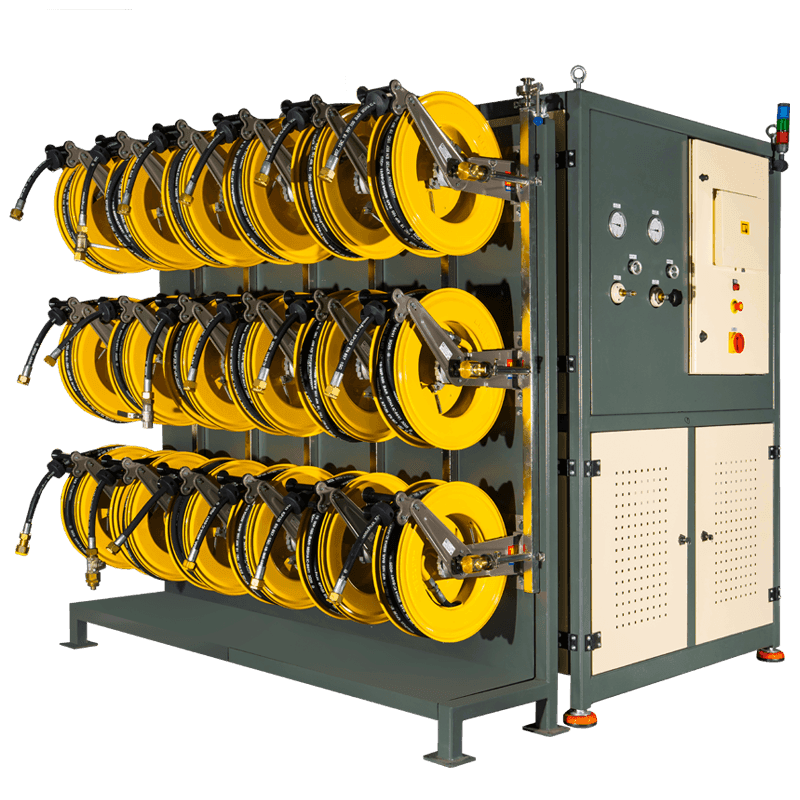
The machine was engineered with Oil & Gas field realities in mind. Each section operates its own dedicated vacuum pump (up to 220 m³/h), solenoid valve assembly, pressure sensors, and 15-meter hose reel with industry-standard quick disconnect couplings — so both compartments can be serviced at the same time without cross-contamination risk. The built-in recovery compressor captures residual nitrogen from hoses and compartments back into a 100-liter storage tank, ensuring zero gas venting to atmosphere and full regulatory compliance. Automatic mode handles the entire vacuum-fill-recover sequence with a single button press and stops precisely at the operator-set target pressure — whether that’s 0.5 bar or 9 bar. Every operation is logged on the HMI with real-time sensor data, vacuum test results, and maintenance hour counters for both pumps, giving maintenance managers the documentation they need without the paperwork. The result: what previously took two operators and multiple reconnections across a full shift was reduced to a single-operator, automated workflow — completed in a fraction of the time, with full traceability and no gas lost to the environment.